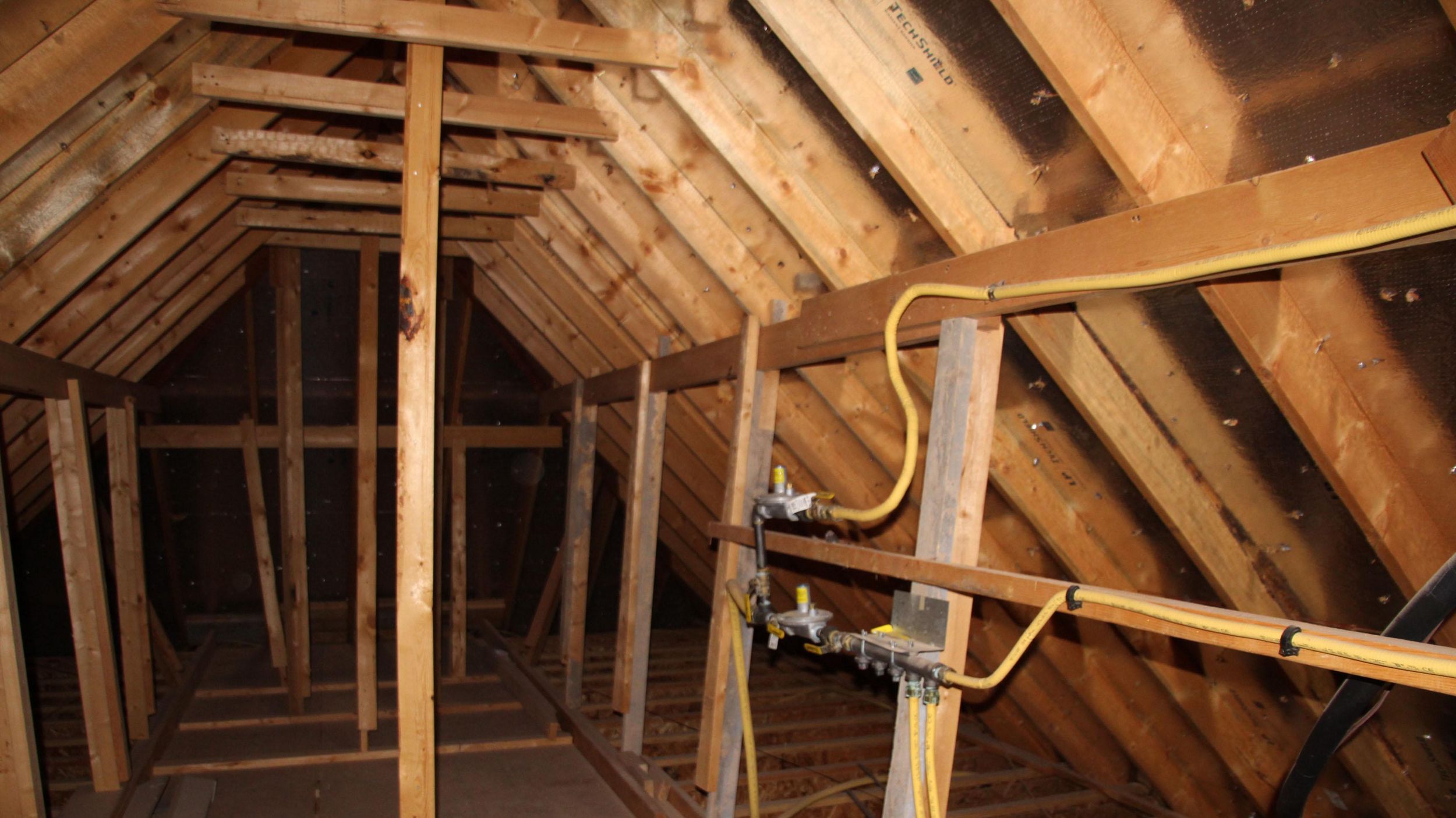
The sun hits your roof and heats it up.
My roof is popping.
The cracking and popping could also be from the joists or beams as they contract and expand.
The sun hits your roof and heats it up.
You can minimize some of the racket and if the house is new the noise probably will diminish over time.
One way to cut down on the noise is to install insulation.
In very rare cases the sounds are a symptom of undue stress and you will need a professional roof inspection.
During climate changes expansion and contraction can cause to the nail to pop up.
This is a step that is generally taken retroactively as it is not necessary when a roof is installed with the proper type of roof underlayment.
At night the outdoor temperature lowers and the wood contracts.
Roof nail pops on a roof can be caused by a variety of reasons.
This movement creates the popping noise.
The denser the barrier between your roof and your interior space the less noise you will hear.
This movement creates the popping noise.
The sun hits your roof and heats it up.
It s thermal expansion and contraction.
Other causes of roof nail pops can be shingles that were not nailed tightly during the roof installation.
The repair procedure included in tsb 0151 13 has been developed to address this condition.
As for the popping noise in the morning and evening that s a different mechanism.
Popping banging or creaking especially in the dead of the night is startling but in most cases those sounds are just your home s reaction to temperature changes.
As the lumber expands it moves and it will rub against other pieces of wood that aren t moving at the same rate.
During the day the wood expands.
Creaking wheezing or popping sounds happen at nighttime due to cooler weather.
As the lumber expands it moves and it will rub against other pieces of wood that aren t moving at the same rate.
Snow and ice build up are another reason for roofs to pop and creak.
When this happens the roof shingles become loose and start to lift.
The wood frame under your roof experiences temperature changes from the outdoor air because the attic does not receive much heating or air conditioning.