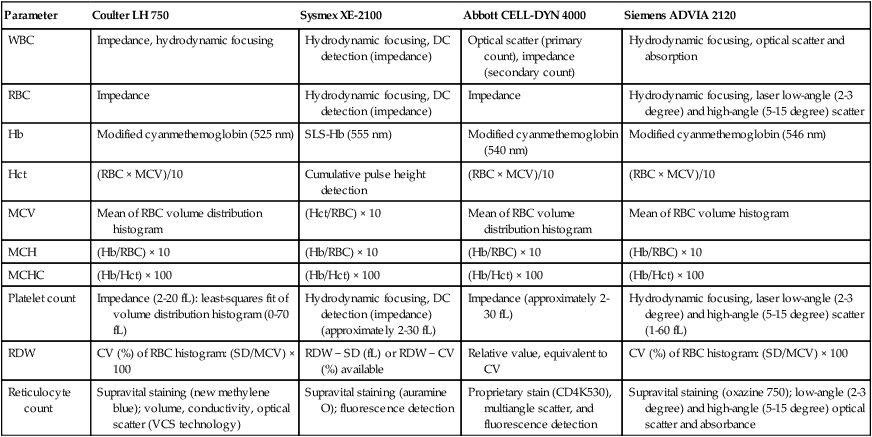
It is used in almost every hematology analyzer.
Optical impedance cell counting.
Blood cell recognition is optimized by diluting specifically to the number of cells present in the blood so as to count the number of cells.
Electrical impedance method the coulter principle 8.
For example the complete blood count can help a physician to determine why a patient feels unwell and what to do to help.
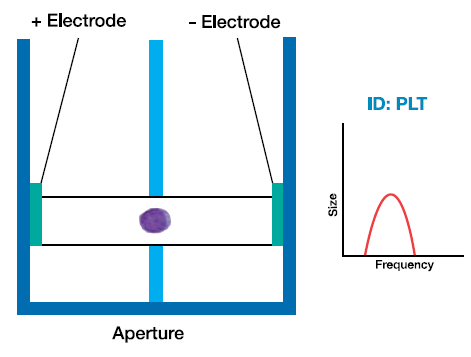
The impedance changes as a cell passes through.
Automated systems are now based on flow through also called flow cytometry optical technologies that identify cells on the basis of light scatter properties broadly equating to the cell s physical characteristic differences.
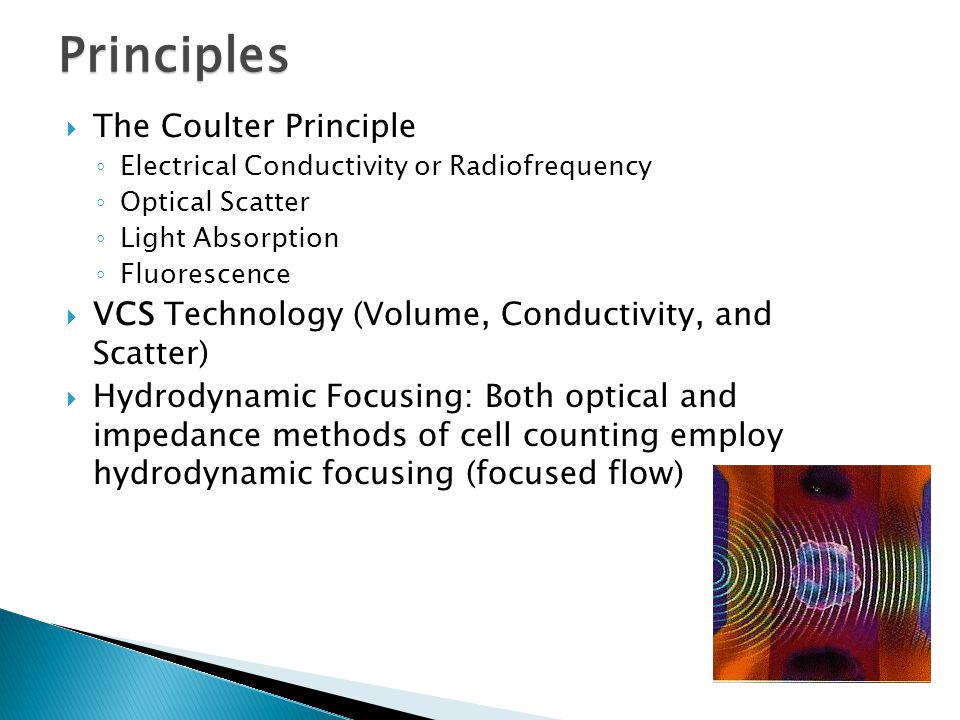
The traditional method for counting cells is electrical impedance also known as the coulter principle.
Red blood cell count also known as corpuscles.
The proportion of platelets greater than 12 fl in the total platelet count may be an indicator of possible platelet clumping giant platelets or cell fragments.
A typical coulter counter has one or more microchannels that.
The coulter principle and the coulter counter that is based on it is the commercial term for the technique known as resistive pulse sensing or electrical zone sensing.
A coulter counter is an apparatus for counting and sizing particles suspended in electrolytes it is used for cells bacteria prokaryotic cells and virus particles.
Cell counting is any of various methods for the counting or similar quantification of cells in the life sciences including medical diagnosis and treatment it is an important subset of cytometry with applications in research and clinical practice.
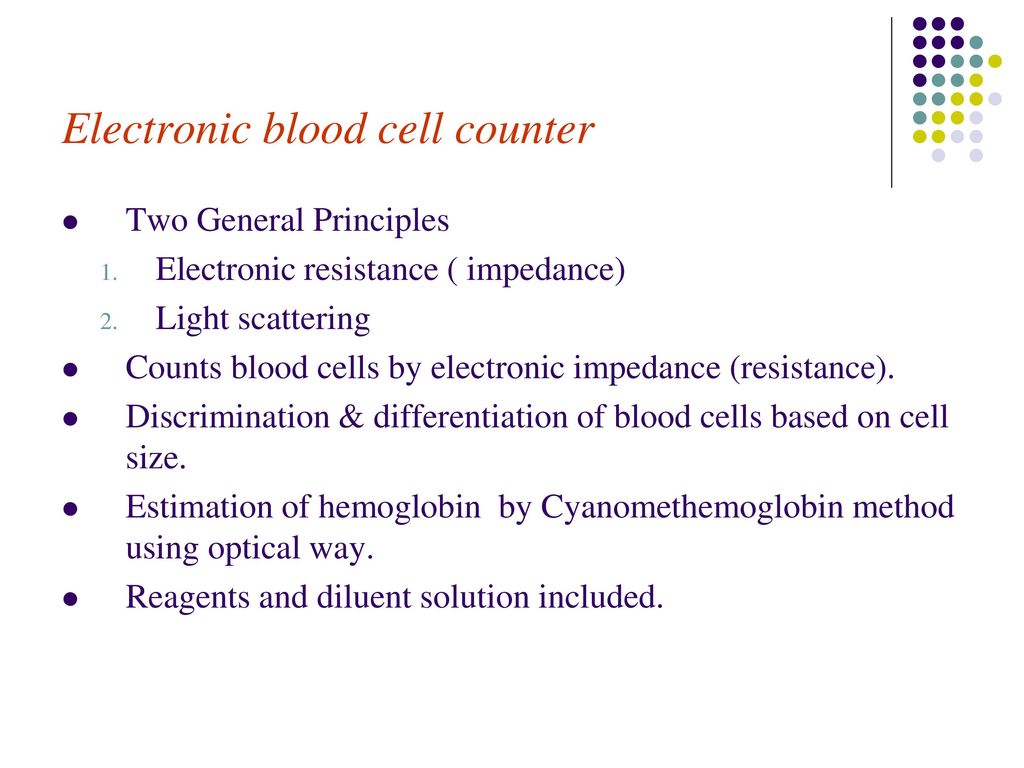
Principles of automated cell counters impedance conductivity system coulter optical system light scattering flow cytometry selective lysis special stains 7.
Pulse height cell volume radiofrequency current rf.
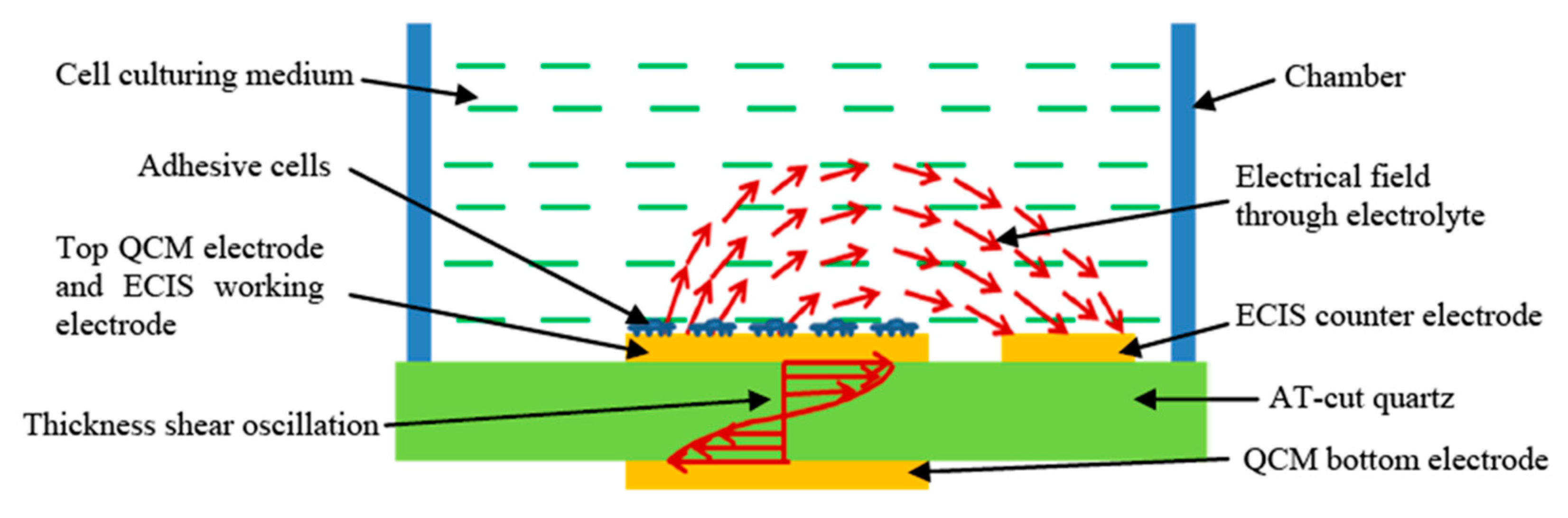
3a the impedance dependent on medium resistance r m cell cytoplasm resistance r i cell membrane capacitance c mem electrical double layer and capacitance c dl and all value of these parameters contributing to total impedance are dependent on frequency ω.
Depending on the instrument this might only be a three part differential lymphs monos and granulocytes.
Provided an electric circuit model of a cell between a pair of electrodes in a channel fig.
Automation of cell counting and characterization has revolutionized hematology analysis.
Pulse height nuclear size and density optical system scattered laser light fluorescence light.
Platelet count also known as thrombocytes critical for blood clotting.
This article delves into the evolution of automated white blood cell differential count technology discuses the role of electrical impedance and looks to optical technologies and their role in the future of blood characterization.
Whole blood is passed between two electrodes through an aperture so narrow that only one cell can pass through at a time.
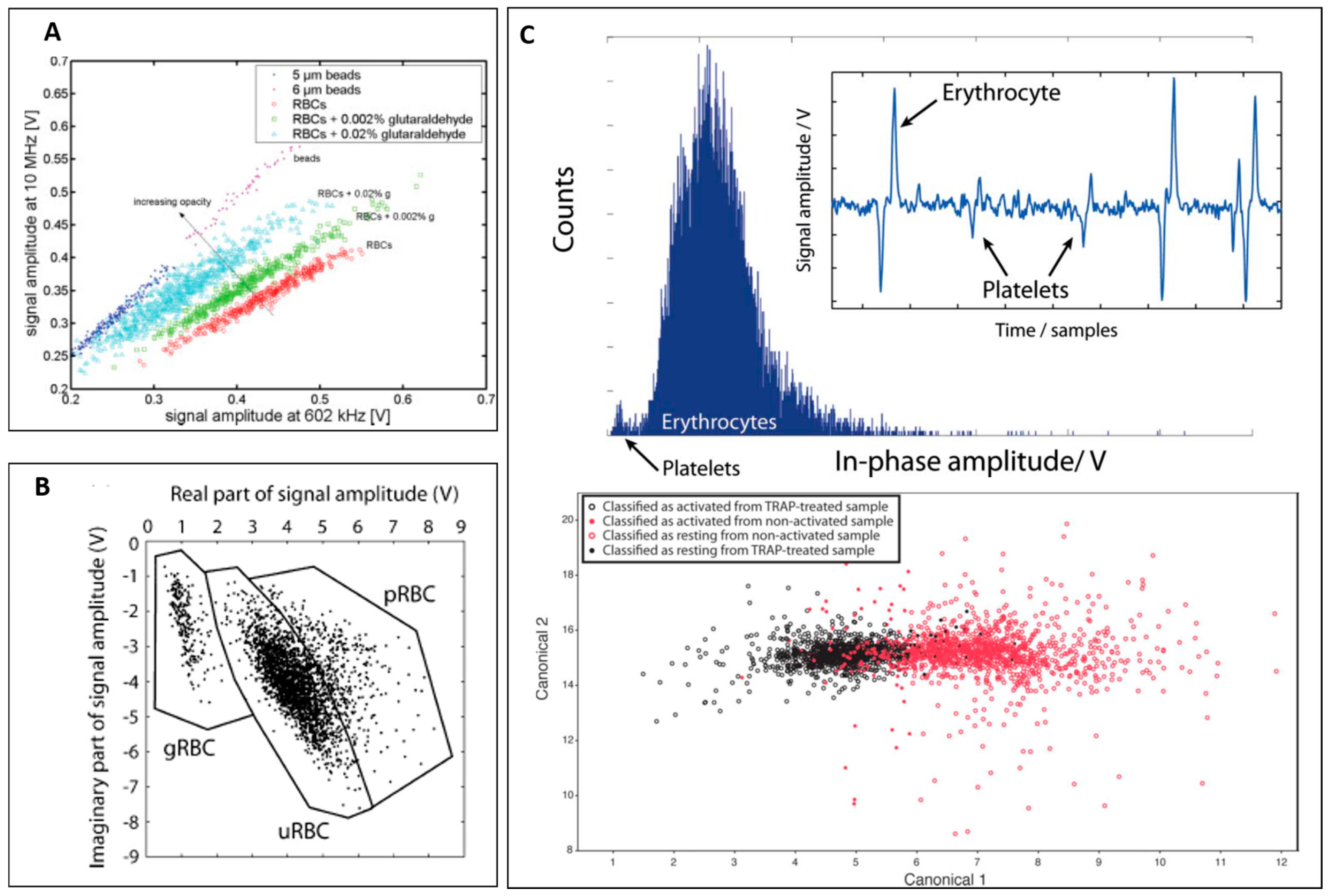
In 2007 morgan et al.
Instruments with optical counting in addition to impedance counting can give the 5 part differential.