Share this article via email with one or more people using the form below.
Pelvic floor mesh recall.
The companies were given until.
Fda recall of transvaginal mesh applies to some but not all pelvic floor procedures urogynecologist dr.
There are other alternative therapies we can offer patients including native tissue repair and abdominal route mesh repair.
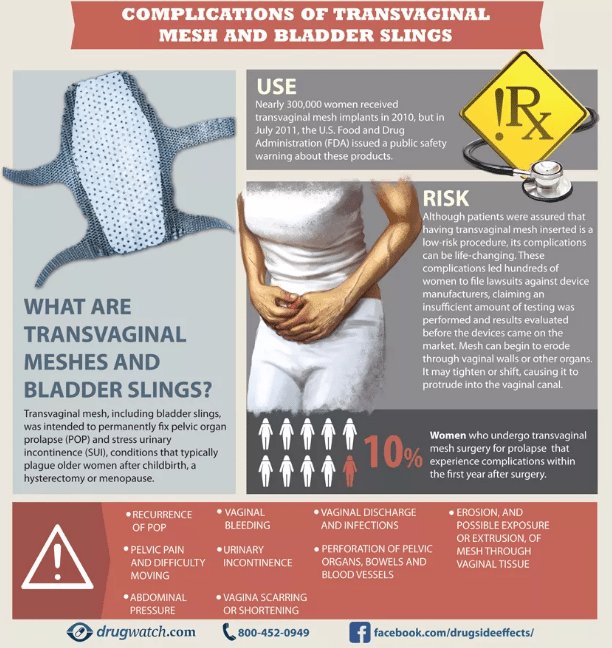
Short term complications associated with the use of transvaginal mesh in pelvic floor reconstructive surgery.
For physicians who already have these devices in stock i recommend contacting patients to discuss alternatives to vaginal mesh procedures for pelvic organ prolapse planned before the recall.
Pelvic mesh devices hit by allegations of research fraud experimental surgery on thousands of women.
Care providers about the use of surgical mesh for transvaginal pelvic organ prolapse is.
Marie fidela paraiso explains.
As many as 20 will require surgery for these conditions.
Caveney m et al.
Acog practice advisory on the fda s reclassification of mesh for pelvic organ prolapse.
The first order reclassified transvaginal mesh for pelvic organ prolapse surgery as a class iii device.
In a survey of 2 220 women who had undergone pelvic mesh implants to.
Results from a multi institutional prospectively maintained dataset.
Food and drug administration today ordered the manufacturers of all remaining surgical mesh products indicated for the transvaginal repair of pelvic organ prolapse pop to stop.
A history of transvaginal mesh.
Texas court kills 1 2m pelvic mesh verdict against j j.
J j wins 1st trial over prosima pelvic mesh.
Performed with surgical mesh to treat pelvic floor.
The sydney morning herald.
If needed a bladder suspension vaginal hysterectomy and rectocele repair can be accomplished at the same time via a vaginal incision.
The second order required companies to submit a premarket approval application to support the use of mesh during pop surgery.
The pelvic floor is a group of muscles in the pelvic area that support the bladder vagina and rectum.
This can happen when the pelvic floor muscles ligaments and tissue that hold the organs in place are weak or damaged.
About 50 of women who have had children experience pelvic floor dysfunction.